
Christian Distinctiveness
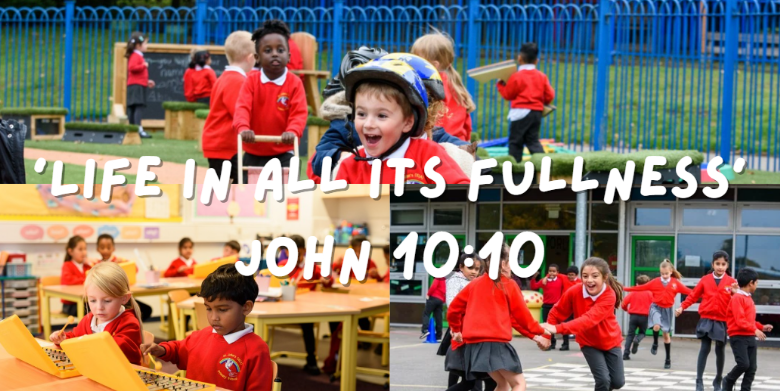
Our Christian distinctiveness is reflected within our school vision of 'Life in all its fullness'.
Spiritual development
At St John's we recognise that there is no universal definition of ‘spirituality’, as it is a deeply personal experience. It differs from person to person and often grows and changes throughout life. We strive to nurture the body, mind and spirit of our school community, enabling each person to become a fully rounded individual. At its heart, spirituality underpins all religious views and beliefs, shaping our values, relationships and understanding of the world.
Developing opportunities for spiritual development at school:
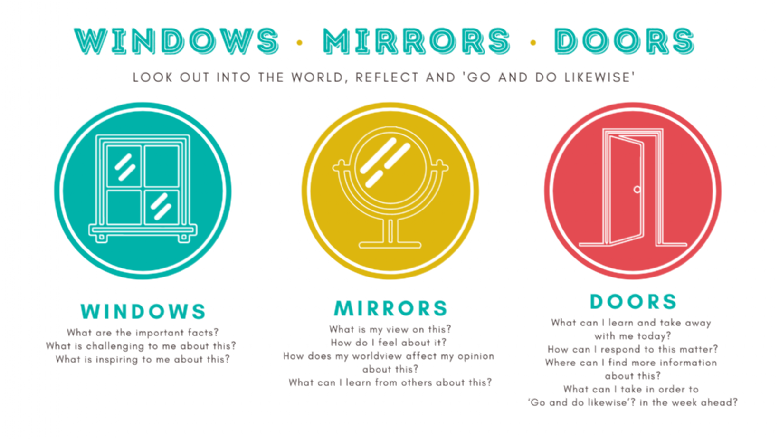
At our school, spiritual development is woven throughout school life and rooted in our vision of life in all its fullness. We provide meaningful opportunities for children to explore, reflect and respond through three key approaches: Windows, Mirrors and Doors.
WINDOWS
We provide children with opportunities to look beyond themselves and become aware of the world in new and exciting ways. Through moments of awe and wonder, children explore life’s ‘Wows’ — the amazing, beautiful and inspiring as well as life’s ‘Ohs’ — the challenges, disappointments and injustices we encounter. In doing so, they begin to understand more about learning life in all its fullness.
MIRRORS
We encourage children to look inwards, reflecting on their own experiences, beliefs and questions. Through discussions, children are challenged to consider life’s big questions and explore possible answers. They learn not only about religion, but from religion, developing their own insights while respecting the perspectives of others, regardless of personal faith.
DOORS
We support children in taking the next step where they are responding to what they have seen and reflected upon. Children are given opportunities to express their thoughts creatively and to put their values into action. Often, they identify these opportunities themselves. Whether responding to local needs or global events, our pupils show compassion and initiative through fundraising and awareness work, including support for the local food bank and international causes such as Toilet Twinning.
Through Windows, Mirrors and Doors, we nurture thoughtful, compassionate and courageous individuals who are learning not only about life, but how to live it well.
St John's Spirituality day!
We had a special Spirituality Day at St John’s. Through our daily collective worship, we have been exploring the concept of ‘spirituality’ and spiritual development with our children. Throughout the day, we explored the idea that ‘spirituality’ can be difficult to define, as it is a deeply personal experience unique to each individual. Each class shared their thoughts, recognising that spirituality can look very different from person to person and is not necessarily the same as having a religion or faith.
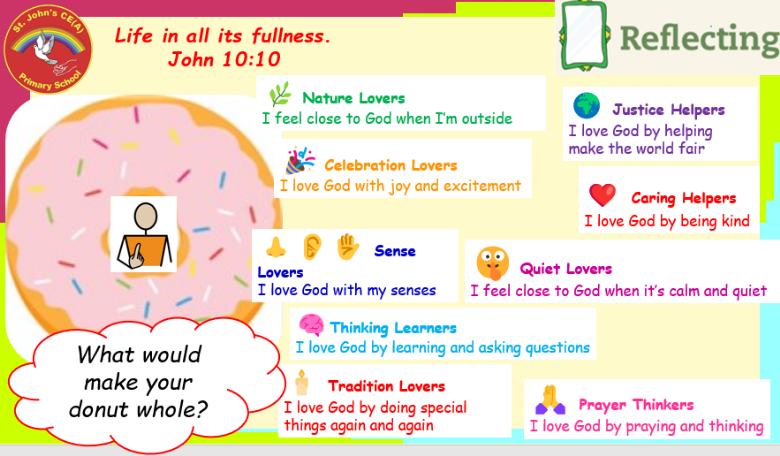
To help us understand this concept, we used the analogy of a doughnut. We imagined ourselves as the outer ring, with an invisible hole inside each of us. This “hole” represents a space that is filled by the things that give our lives meaning—bringing us joy, happiness, calmness, and a sense of peace.
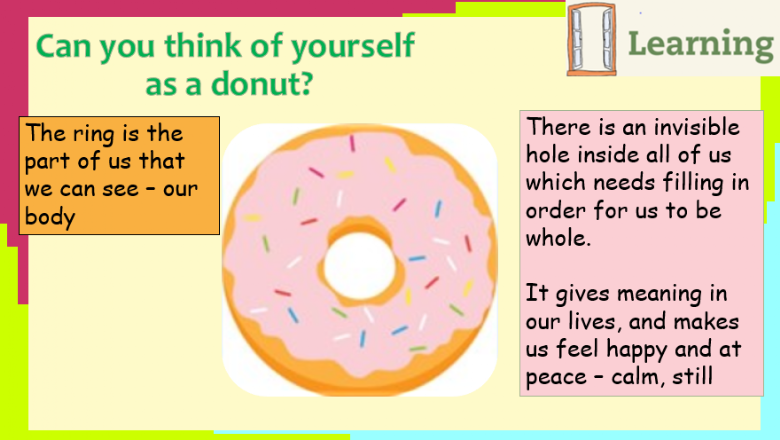
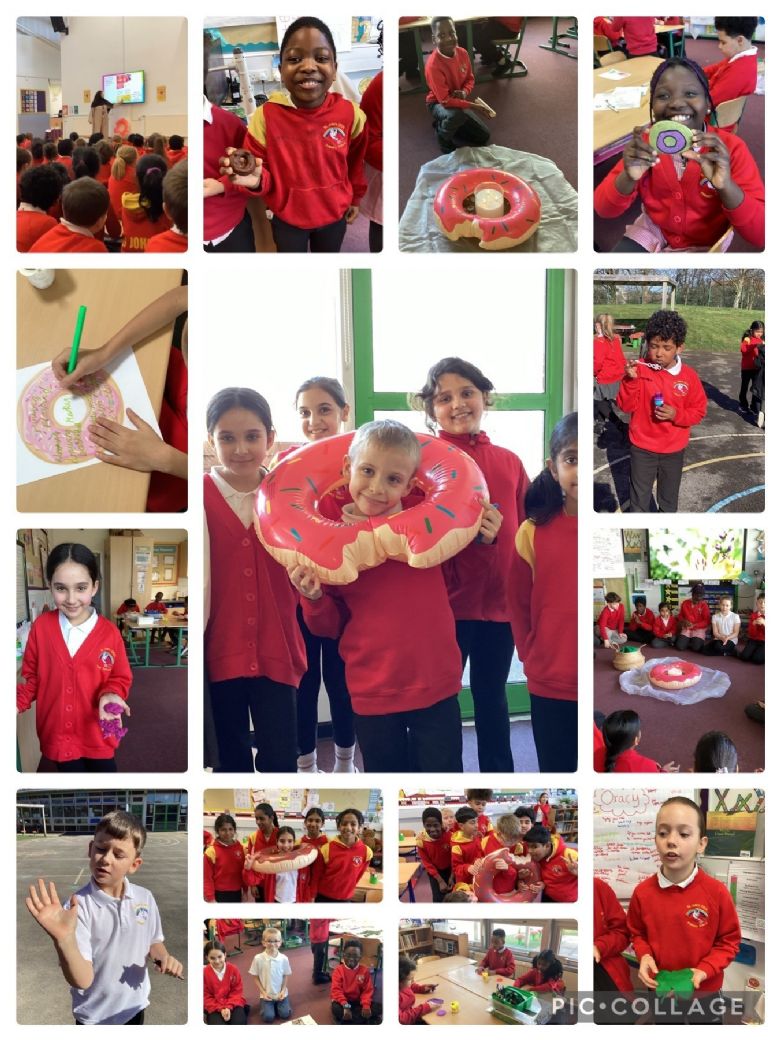
Have a look at us in action. We even had a doughnut as a special treat to help us think of the spirituality analogy.
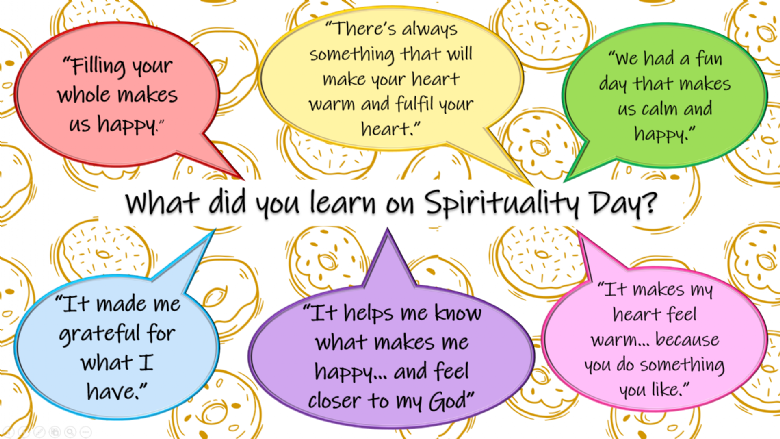
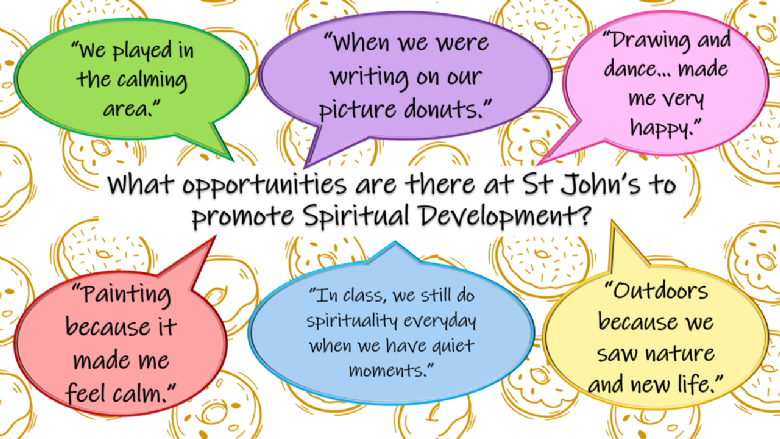
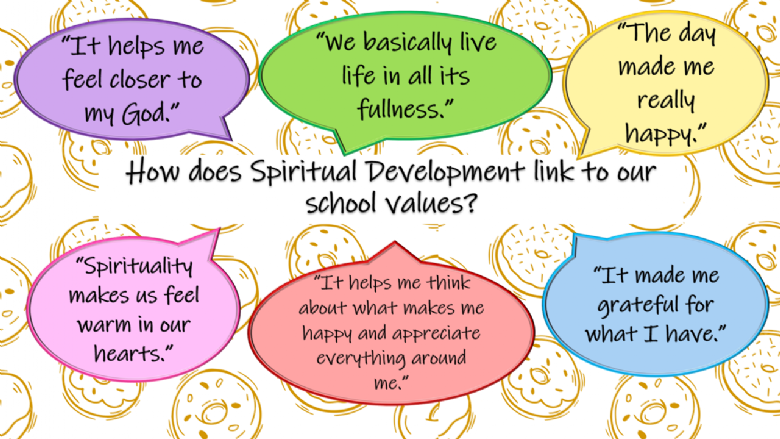
Spiritual development at St John's is central to enabling pupils to flourish and to fulfil the school vision of “living life in all its fullness” (John 10:10). It supports pupils in developing a strong sense of purpose, resilience, and well-being, helping them to grow into well-rounded individuals who make a positive contribution to their communities. This is achieved in the following ways:
1. Encouraging Self-Discovery and Identity
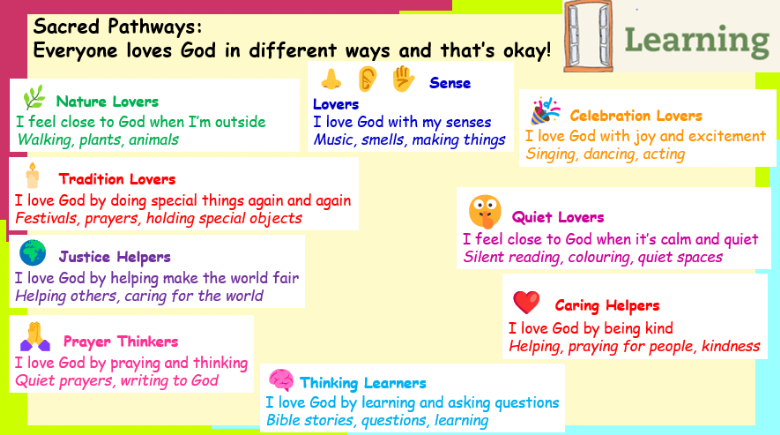
Spiritual development invites pupils to reflect on who they are, what they value, and what they believe. This growing self-awareness nurtures confidence and self-worth, empowering pupils to make meaningful choices and embrace their unique potential. Through the nine sacred pathways, children are encouraged to recognise and celebrate their individual qualities, ensuring they “fill their hole” with what brings them joy, peace, and a sense of purpose.
2. Developing a Sense of Purpose and Meaning
By exploring spiritual and moral questions, pupils gain a deeper understanding of what gives life meaning. This supports the vision of living life in all its fullness by encouraging them to look beyond material success and towards lives enriched by compassion, gratitude, and service to others.
3. Fostering Emotional Well-Being and Resilience
Spiritual development promotes inner peace, reflection, and mindfulness, helping pupils to manage challenges and setbacks. As resilience grows, pupils are better equipped to face difficulties with hope and perseverance, leading balanced, joyful, and emotionally healthy lives.
4. Cultivating Compassion and Respect for Others
Spiritually developed pupils learn to value diversity, respect differing beliefs, and build positive relationships. By fostering empathy, kindness, and understanding, they contribute to a caring and inclusive school community where everyone is supported to thrive.
5. Encouraging Curiosity and a Love of Learning
Spiritual development nurtures a sense of awe and wonder about the world. Pupils are encouraged to ask questions, explore ideas deeply, and seek wisdom, supporting a holistic approach to learning that enriches their educational experience and their lives.
6. Inspiring Service and Social Responsibility
Spiritually aware pupils recognise their responsibility within the wider world. They are motivated to act justly, serve others, and make ethical choices, living out the school’s vision through both their actions and attitudes.
By nurturing these aspects of spiritual development, schools create an environment in which pupils truly flourish and grow into individuals who live with purpose, compassion, and fulfilment.
How can I support my child's spirituality?
https://www.youtube.com/watch?v=fI-iXfQMqfE
If you would like to find out more about supporting your child’s spiritual development, please watch the video above from the National Institute for Christian Education (nicer.org.uk).
Fostering spiritual awareness in children is a deeply personal and meaningful journey. Below are ten simple ways you can help nurture your child’s spiritual development at home:
Be a role model
Your own values, attitudes and practices will naturally influence your child. Demonstrating kindness, gratitude, reflection and compassion helps children see spirituality lived out in everyday life.
Encourage open dialogue
Create a safe space for open and non-judgemental conversations. Allow your child to ask questions, share their thoughts and express their feelings about life, faith and the world around them.
Explore different beliefs and traditions
Help your child appreciate the richness and diversity of beliefs, cultures and traditions. This encourages respect, understanding and curiosity.
Spend time in nature and practise mindfulness
Time outdoors can inspire awe and wonder. Encourage your child to notice beauty in the natural world. Simple mindfulness activities can help develop calmness, gratitude and awareness.
Share meaningful stories
Read and discuss age-appropriate stories with moral or spiritual themes. Stories can help children reflect on values such as courage, forgiveness, hope and love.
Create family rituals
Simple family traditions such as shared mealtimes, prayers, quiet reflection or celebrations can provide a sense of belonging and meaning. Involve your child, so these moments feel personal and purposeful.
Encourage reflection
Support your child in thinking about their experiences, beliefs and values. This might include quiet thinking time, drawing, prayer or keeping a journal.
Model and practise kindness
Engage in acts of service together, such as supporting a local charity or helping a neighbour. Small acts of kindness help children understand compassion in action.
Welcome questions
Children are naturally curious. Encourage their questions about life, faith and meaning, and explore possible answers together.
Support mind and body wellbeing
Activities such as yoga, breathing exercises or quiet reflection can help children develop inner peace, balance and self-awareness.
Spirituality is a personal and evolving journey. It is important to respect your child’s individuality and allow their beliefs and values to develop over time. By creating a supportive, open and loving environment, you help lay strong foundations for their spiritual growth and wellbeing.
The impact of Spirituality at St John's Primary
Spirituality at St John’s enables our children to develop a strong sense of self-worth and respect for others. They build positive, caring relationships and show kindness and empathy in their daily interactions. Our children take joy in the world around them, demonstrating curiosity, wonder and a love of learning. They are open to exploring deeper questions about life and, for many, this includes developing a faith and belief in God.
At St John’s, children can confidently talk about the school’s Christian vision and values, alongside a growing understanding of positive life values, including British Values. They flourish within our community and live out our vision in their everyday actions. Pupils are able to recognise, express and manage their emotions, while showing respect and understanding for the feelings of others. They demonstrate a strong moral compass and actively engage in opportunities to make a difference, showing themselves to be responsible, compassionate and active citizens. Children value moments of quiet reflection and stillness, and they express creativity, imagination and joy in discovering new ideas and skills.
How does our RE Curriculum support Spiritual Development?
The Church of England Statement of Entitlement outlines the aims and expectations for Religious Education in Church schools and guides St John’s approach to RE and spirituality. The role of RE is not to promote or undermine organised religion; rather, it provides structured opportunities to explore different aspects of life.
RE plays a vital role in encouraging children to ask meaningful and challenging questions about purpose, belief and what it means to be human. It supports pupils in developing their own spiritual understanding and personal journey of meaning and value.
Through RE, children reflect on and share their own experiences while learning about the beliefs, traditions and lived experiences of others. This helps to broaden their perspectives, deepen their understanding and shape their own viewpoints.
High-quality RE teaching at St John’s engages children with “Big Questions” that challenge their thinking. Pupils are encouraged to think critically about religious, spiritual and philosophical ideas, developing the confidence and skills to discuss and reflect on these concepts with respect and insight.